
Problems under manufactured homes can include standing water, damaged ground vapor barriers, torn belly wrap, missing insulation, displaced support components, and visible concerns with anchoring, plumbing, or ductwork. A manufactured home inspection evaluates accessible areas beneath the home and documents conditions that may need repair or further evaluation.
A clean interior does not show the condition of the crawlspace. Before buying a manufactured or mobile home in Minnesota, it helps to understand what is underneath it and what an inspection can establish. Here are seven problems under manufactured homes that buyers should understand.
Why does the space under a manufactured home matter?
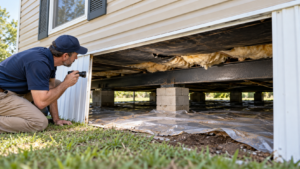
Areas evaluated beneath manufactured homes include supports, insulation, ground covering, and visible moisture conditions.
The area beneath a manufactured home can contain support piers, parts of the steel chassis, anchoring components, plumbing, ductwork, and the protective covering beneath the floor insulation. Installation arrangements vary, so the inspection should consider the home’s particular setup.
Moisture and damaged materials in this space can affect the home above. Some conditions remain out of view behind skirting or within the enclosed floor assembly. Our manufactured home inspection services in Minnesota focus on visible and accessible components, including crawlspace and understructure conditions.
7 common problems under manufactured homes
1. Standing water and persistent moisture
Water beneath a manufactured home may come from plumbing leaks, surface drainage, snowmelt, groundwater, or condensation. Standing water, damp soil, staining, and wet insulation deserve attention, but the source may not be clear from a single inspection.
The next step is to identify and address the moisture source, then evaluate affected materials. Adding plastic over wet ground does not correct a plumbing leak or a drainage problem. The EPA’s guide to moisture and mold explains why correcting water problems is an essential part of controlling mold growth.
2. Missing or damaged ground vapor barriers
A ground vapor barrier, also called a vapor retarder, covers soil beneath the home to limit moisture moving from the ground into the crawlspace. Torn, displaced, or incomplete coverings can leave exposed soil.
The ground covering is separate from the material attached beneath the floor. An inspection should distinguish these components and document visible gaps or damage. Appropriate repairs depend on the installation and the condition of the materials.
3. Torn belly wrap and damaged insulation
Belly wrap, sometimes called a belly board or bottom board, is the protective covering beneath the floor assembly. Openings from previous repairs, pests, or deterioration can expose insulation and other components.
Visible findings may include hanging insulation, open seams, missing patches, or evidence of moisture. Repairs should address the cause and condition of affected materials before the opening is closed. Covering wet insulation with a patch leaves the underlying issue unresolved.
The U.S. Department of Energy provides guidance on insulating a manufactured home belly, illustrating why this assembly deserves specific attention.
4. Displaced or deteriorated support components
Accessible supports may show cracked blocks, leaning piers, displaced shims, corrosion, or gaps at bearing points. Uneven floors or sticking doors inside the home can provide additional context, but those symptoms alone do not establish foundation movement.
The inspector documents visible conditions and recommends evaluation by a qualified manufactured home contractor or licensed professional engineer when appropriate. Support adjustments should follow the applicable installation design and professional recommendations.
5. Damaged skirting and ventilation concerns
Loose or missing skirting can leave openings for animals and expose the space beneath the home to weather. Vegetation, stored materials, or debris may also obstruct intended ventilation openings.
Ventilation needs depend on the crawlspace design and installation requirements. Adding vents or closing existing openings without considering that design may not resolve moisture concerns. Review the manufacturer’s instructions and obtain qualified guidance before changing the system.
HUD’s manufactured housing homeowner resources explain the role of manufacturer instructions in installation, anchoring, and maintenance.
6. Visible anchoring and tie-down concerns
Accessible anchoring components may show corrosion, loose straps, damaged connections, or displaced parts. Some portions may be buried, concealed, or outside the inspection’s accessible areas.
A visual inspection can identify observed concerns. It does not establish the capacity of an anchoring system or certify the foundation. Further evaluation may be needed when components are damaged or installation details cannot be confirmed.
7. Plumbing leaks and disconnected ductwork
Visible plumbing leaks can contribute to wet ground or damaged floor materials. Disconnected, crushed, or poorly supported ductwork can affect conditioned-air delivery. Access may be limited where these components are enclosed within the floor assembly.
Documented concerns should be evaluated by the appropriate plumbing or HVAC professional. Repairs should include checking affected surrounding materials rather than addressing only the visible connection.
What can a manufactured home inspection tell you?
An inspection provides information about observed conditions within the agreed scope. It should explain the location of a finding, supporting observations, and recommended next steps. Debris, stored items, damaged access panels, or low clearance may limit the areas evaluated.
Mason Home Inspections performs visual inspections of accessible components. We do not provide engineering certification, structural approval, or foundation certification. If a lender requires a separate certification, confirm the requirements and consult a licensed professional engineer.
Review what is included in a home inspection and view a sample inspection report before booking.
Frequently asked questions about problems under manufactured homes
Is water under a manufactured home normal?
Standing water or persistent dampness should be evaluated. The source may involve drainage, plumbing, groundwater, or condensation. A single visit may not establish whether the condition is seasonal or ongoing.
Are belly wrap and a ground vapor barrier the same thing?
No. Belly wrap is attached beneath the floor assembly and helps protect the insulation. A ground vapor barrier covers soil beneath the home. Damage to either component should be assessed separately.
Does a home inspection include foundation certification?
Mason Home Inspections does not provide foundation or engineering certification. Our inspection documents visible and accessible conditions. Separate lender or agency requirements should be confirmed before arranging certification services.
Should buyers enter the crawlspace themselves?
Ask the inspector about access and documented findings rather than entering an unfamiliar crawlspace. Limited clearance, exposed wiring, damaged materials, and standing water can affect whether entry is appropriate.
Schedule a manufactured home inspection in Minnesota
Mason Home Inspections serves Center City, Chisago County, Pine County, Hinckley, Cambridge, Forest Lake, and surrounding Minnesota communities.
Buying a manufactured home? Contact Mason Home Inspections to discuss the property, available access, and inspection scope. Understanding problems under manufactured homes starts with documenting the conditions that can be observed.